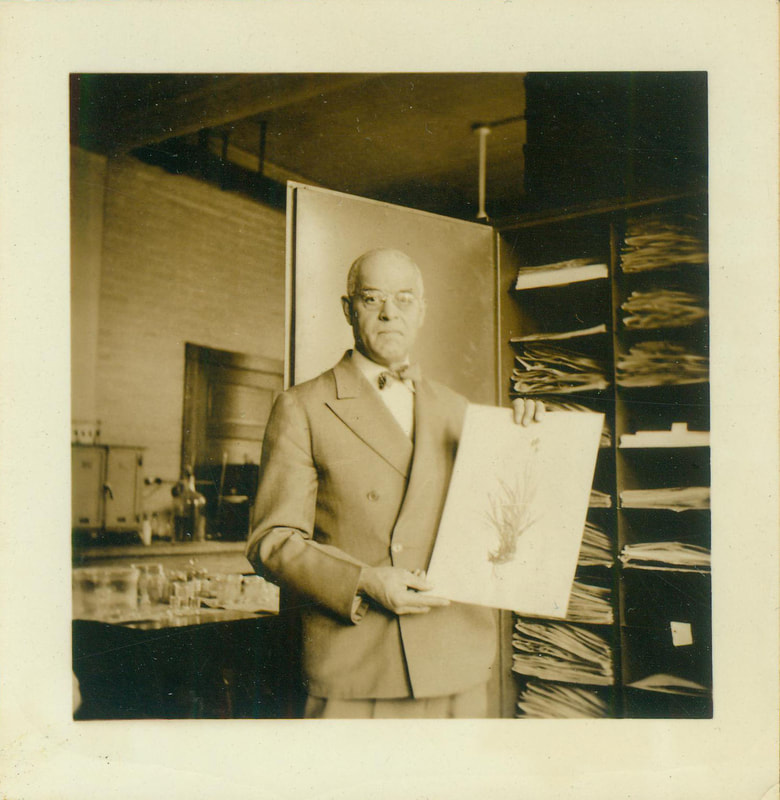
Very few botanists ever discover a new species. Even fewer get that species named for them. But only one botanist in a million accomplishes both of those things and is the subject of a children’s book about their life. Charles Stewart Parker (1882-1950) achieved that distinction.
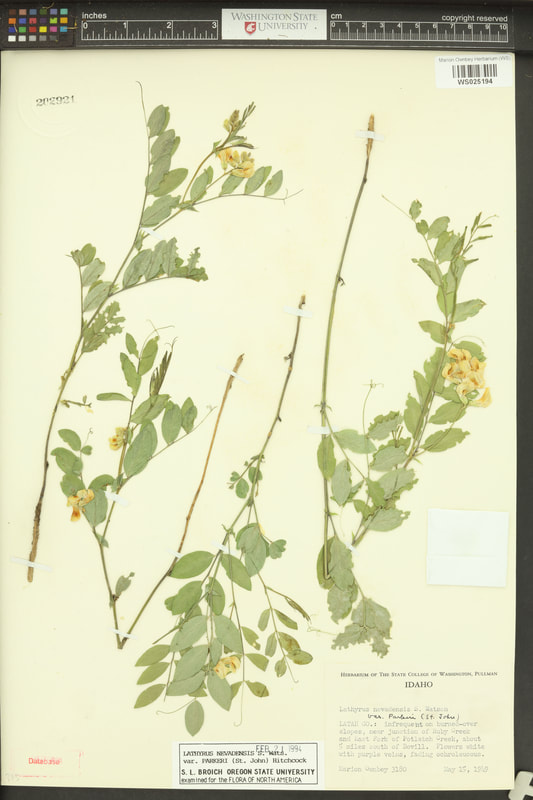
Parker grew up in a relatively prosperous African American household in Spokane, Washington. Initially he trained for the ministry, but later started a printing business and a newspaper in his hometown. In World War I he volunteered for the US Army and attained the rank of Lieutenant, leading a segregated unit in France. Parker always had an interest in plants and gardening, and after the war he enrolled at the State College of Washington (now WSU) in Pullman, earning bachelor’s and master’s degrees in botany under the herbarium director, Harold St. John. Parker helped collect vascular plant specimens from Washington and Idaho that informed St. John’s revision of the Flora of Southeastern Washington. One of his collections was a large, white-flowered peavine with numerous ovate leaflets and well-developed tendrils that turned out to be a new species. St. John named the plant Lathyrus parkeri (it is still recognized, but now reclassified as L. nevadensis var. parkeri).
After graduating from WSU, Parker was hired as a botany instructor at Howard University, a historical black university in Washington, D.C. Parker developed an interest in crop diseases and became an expert on the fungus genus Hypholoma, for which he wrote his doctoral dissertation at Penn State at the age of 50. Parker ultimately became chair of the Howard University Botany Department and mentored a generation of students, many who went on be pioneering botanists too. Parker’s life story is memorialized in a 2023 children’s book entitled Rooting for Plants: The Unstoppable Charles S. Parker, Black Botanist and Collector by Janice N. Harrington that hopefully will inspire many more generations. – Walter Fertig, 19 June 2024