Alpine habitats are found above timberline on only the highest mountains and are characterized by high winds, cold winters, and short growing seasons. Plants that are hardy enough to grow in the alpine tend to be low-growing (to avoid being shredded by the ever-present wind) and perennial. Many alpine species in the Rocky Mountains, Cascade-Sierras, and Olympic mountains of western North America are the same or closely related to arctic species found hundreds to thousands of miles to the north and beyond the boreal forest tree line. While both environments share similar cold temperatures in the growing season, they differ in that arctic regions have continuous daylight in the summer and cold soils due to permafrost, and alpine sites are subjected to greater light intensity and larger fluctuations in diurnal and nocturnal temperatures.
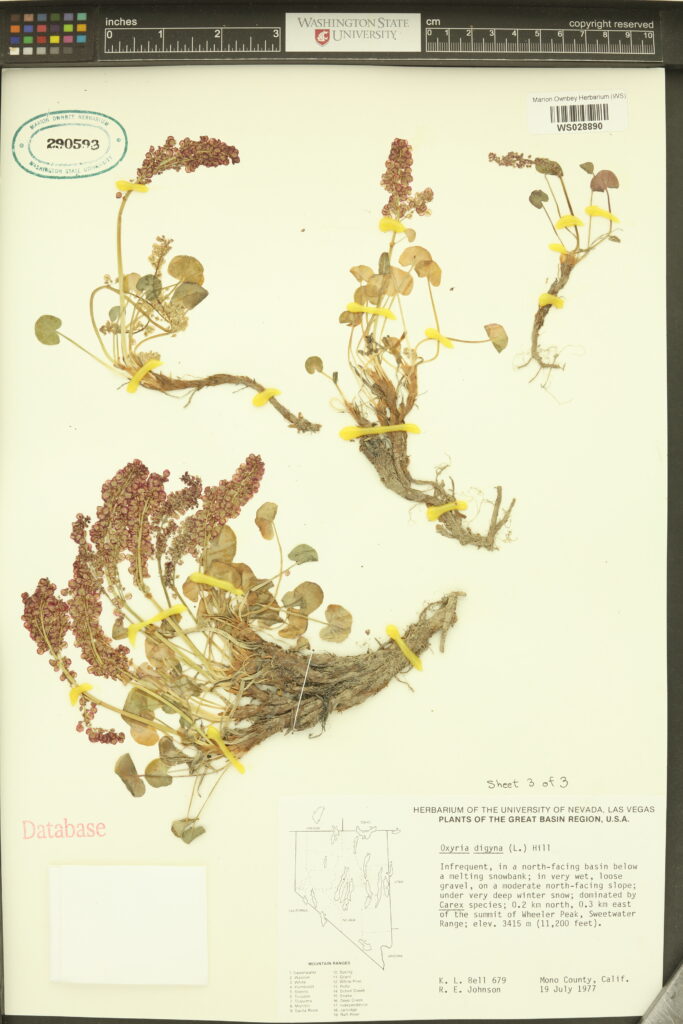
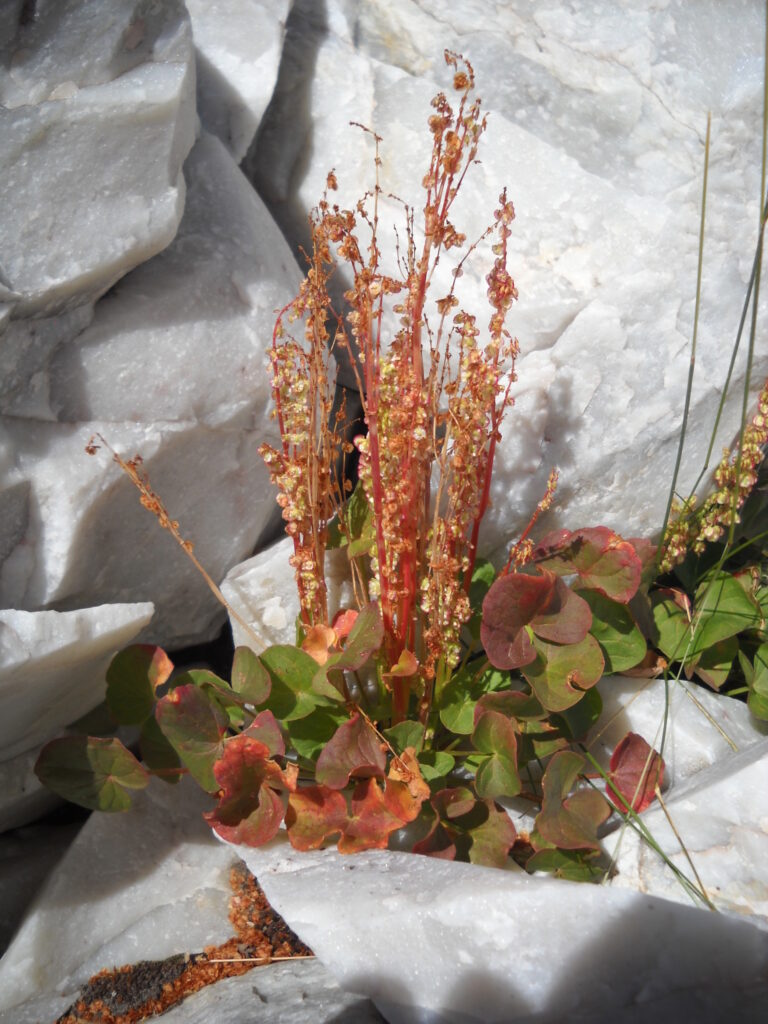
Alpine sorrel (Oxyria digyna) in the buckwheat family (Polygonaceae) is one of over 500 vascular plant species known to occur in both the arctic and alpine zones. This species is easily recognized by its fleshy, kidney-shaped basal and stem leaves and elongated narrow panicle of tiny green to reddish flowers with 4 tepals (sepals and petals that look the same) and red fruits with prominent wings at maturity. This herb is restricted to shady, rocky sites with drifting snow and easily wilts under drought stress. The leaves are mildly acidic (from oxalic acid) and high in vitamin C and were eaten by Inuit people to avoid scurvy (they can also be a tasty treat for hikers).
A classic common garden study by Harold Mooney and Dwight Billings showed that arctic and alpine populations of Oxyria digyna maintained distinct morphological and physiological differences when grown together. The alpine plants consistently had a higher temperature optimum and higher light requirement for maximal photosynthesis. Blooming times also differed, with plants from southern Wyoming requiring 15 hours of daylight to flower, while those in the Olympic Mountains needed 16 hours and plants from the North Slope of Alaska needed continuous daylight. Mooney and Billings demonstrated that these populations represented different genetically based ecotypes that were each adapted to the unique abiotic conditions of their native environment. Over sufficient time, such locally-adapted genotypes might evolve into new subspecies or species, as has happened for some alpine taxa in isolated mountain ranges, such as the Olympic Range in Washington (home to 6 endemic alpine and montane plant species, though not its own Oxyria!). – Walter Fertig 17 May 2026