Volunteer Opportunities
The museum staff is small. We greatly appreciate our volunteers.
Volunteers can design exhibits, work in the research collection, or prepare museum specimen. A limited number of students can work at the museum in exchange for course credit. All volunteers must be 18 or older.
Creating or Upgrading a Display
Designing and installing a display usually takes a minimum of about 40 hours. The museum will fund the printing and materials needed for student-led displays. You can update an existing display or select from taxidermy that is currently in storage. You will be responsible for writing signage and sourcing appropriate photos, backgrounds, decor, etc. Creating signs can be challenging – you will have the opportunity to hone your science communication skills. Museum signs should be interesting and understandable for a public audience, but concise.
Volunteers that successfully create and install a display will get a sign in the display acknowledging their efforts.
Examples of displays created by volunteers are the Bush Pig, Lead Shot, Mountain Goat, and Fur Touch Table.

Research Collection
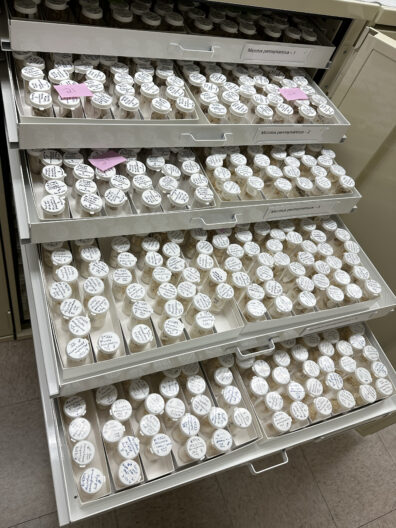
The Research Collection is the core of the museum. Much of the work in the research collection is greatly important, requiring a delicate touch and meticulous attention to detail. It often involves tasks such as entering large amounts of data into a computer or writing specimen labels in small, neat handwriting. This work requires a high level of patience and care but serves a critical purpose in making our specimens and data available for research for decades to come.
Specimen Preparation
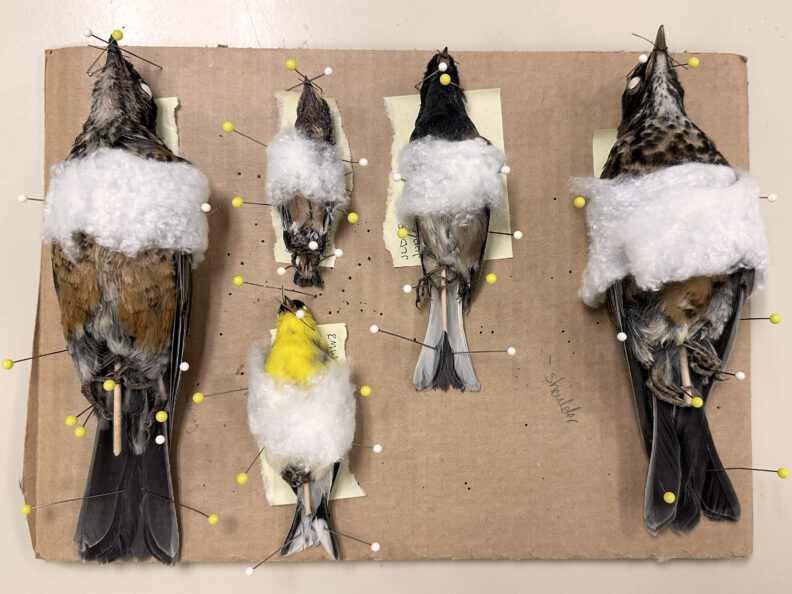
Specimens for the research collection are prepared as “study skins.” Preparation of study skins requires far less expertise than a taxidermy mount, but most people need to prepare several skins to become reasonably adept at it. Preparation of a study skin requires skinning a bird or mammal, collecting tissue samples, filling the skin with a cotton “body”, sewing the skin back up, and writing a specimen label.
Preparation of a study skin typically requires a block of several hours of time, especially during the learning process. Teaching study skin preparation also takes a substantial amount of the curator’s time, so, if you think you might like to prepare skins, we ask that you commit to preparing at least five specimens.